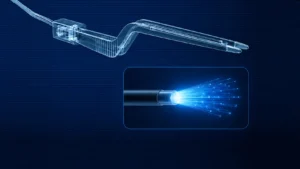
Understanding how advanced illumination technologies can enhance surgical visibility and support procedural precision.
The Importance Of Surgical Visibility
Visualization plays a critical role in every surgical procedure.
Regardless of specialty or technique, surgeons depend on clear visibility to identify anatomical structures, navigate complex environments, and perform precise interventions.
As procedures become increasingly minimally invasive, maintaining optimal visualization becomes even more important.
What Is Cold Light?
Cold light refers to illumination systems specifically designed to provide visibility while minimizing thermal impact on surrounding tissues.
Unlike traditional light sources that may generate significant heat, cold light technologies focus on delivering effective illumination with minimal thermal transfer.
This characteristic makes cold light particularly valuable in surgical environments where precision and tissue preservation are essential.
Challenges Of Traditional Illumination
In many surgical procedures, visibility depends on external lighting systems positioned outside the operative field.
While effective in many situations, these systems can present challenges when operating in:
- Deep surgical corridors
- Narrow anatomical spaces
- Restricted access environments
- Minimally invasive procedures
As working depth increases, achieving consistent illumination can become more complex.
Bringing Light Directly To The Surgical Field
The Ultraseal Supernova approaches illumination differently.
Its integrated dual self-illumination system delivers cold light directly through the instrument, providing focused visibility at the working area.
By bringing illumination closer to the target anatomy, the system helps improve visualization where traditional lighting may be less effective.
Supporting Precision And Control
Improved visibility often contributes to greater procedural confidence.
When anatomical structures are more clearly visualized, surgeons can focus on precision, control, and workflow efficiency.
Integrated illumination supports this objective by maintaining consistent lighting exactly where it is needed throughout the procedure.
Designed For Modern Surgical Approaches
Modern surgical techniques increasingly emphasize smaller access points, reduced tissue disruption, and enhanced precision.
These approaches often require instruments capable of supporting visibility within confined spaces.
The Supernova was developed with these challenges in mind, combining advanced bipolar functionality with integrated cold light technology in a single instrument.
Looking Toward The Future
As surgical technology continues to evolve, integrated illumination systems are expected to play an increasingly important role in procedural efficiency and visualization.
Innovations that combine multiple technologies within a single instrument have the potential to simplify workflows while enhancing surgical performance.
The Ultraseal Supernova represents an example of this evolution, bringing illumination and bipolar functionality together in a unified design.
Conclusion
Cold light technology represents an important advancement in surgical visualization.
By delivering focused illumination directly to the operative field, the Ultraseal Supernova helps support visibility, precision, and workflow efficiency in modern surgical environments.