How enhanced visibility supports precision in modern minimally invasive surgical procedures.
The Evolution Of Minimally Invasive Surgery
Over the past decades, minimally invasive techniques have transformed surgical practice across multiple specialties.
These approaches aim to reduce tissue disruption while providing access to complex anatomical structures through smaller surgical corridors.
As these techniques continue to evolve, visualization remains one of the most important factors influencing procedural precision.
The Challenge Of Deep Surgical Access
Minimally invasive procedures frequently require surgeons to work through narrow pathways and limited access points.
Examples include:
- Tubular retractor procedures
- ALIF approaches
- XLIF procedures
- OLIF procedures
- Keyhole cranial surgery
Within these environments, maintaining clear visibility can be challenging.
Why Visibility Matters
Visualization directly influences the ability to identify anatomical landmarks, navigate complex structures, and perform precise tissue manipulation.
As working depth increases and access becomes more restricted, lighting conditions may become increasingly important.
For this reason, modern surgical instruments continue to evolve toward solutions that support enhanced visibility.
Bringing Illumination Closer To The Target
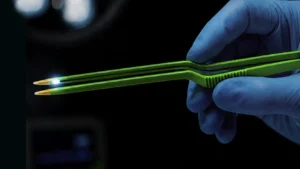
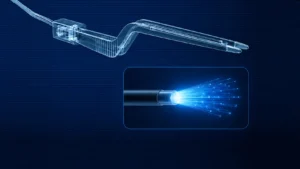
The Ultraseal Supernova was developed to address this challenge through an integrated dual self-illumination system.
Instead of relying exclusively on external lighting systems, the instrument delivers cold light directly to the working area through an internal fiber optic pathway.
This design helps bring illumination closer to the anatomy being treated.
Supporting Surgical Precision
Enhanced visibility can contribute to greater confidence during delicate procedures.
When surgeons can clearly visualize the operative field, they are better positioned to focus on precision, control, and workflow efficiency.
The combination of advanced bipolar functionality and integrated illumination allows the Supernova to support these objectives in a single instrument.
Designed For Modern Surgical Environments
Modern operating rooms demand solutions that combine performance, simplicity, and efficiency.
The Supernova integrates:
- Bipolar functionality
- Cold light illumination
- Ergonomic handling
- Anti-stick tip technology
- Universal compatibility
within a single platform engineered for demanding surgical environments.
Looking Toward The Future
The future of minimally invasive surgery will continue to depend on innovations that improve visibility, precision, and workflow efficiency.
Integrated technologies that reduce complexity while enhancing performance are expected to play an increasingly important role in surgical instrumentation.
The Ultraseal Supernova represents one example of this ongoing evolution.
Conclusion
Better visualization remains one of the most valuable tools available to surgeons performing minimally invasive procedures.
By combining advanced bipolar technology with integrated cold light illumination, the Ultraseal Supernova helps support precision, visibility, and efficiency in modern surgical environments.